Charles Barkley Angers West Baltimore Residents In TV Taping

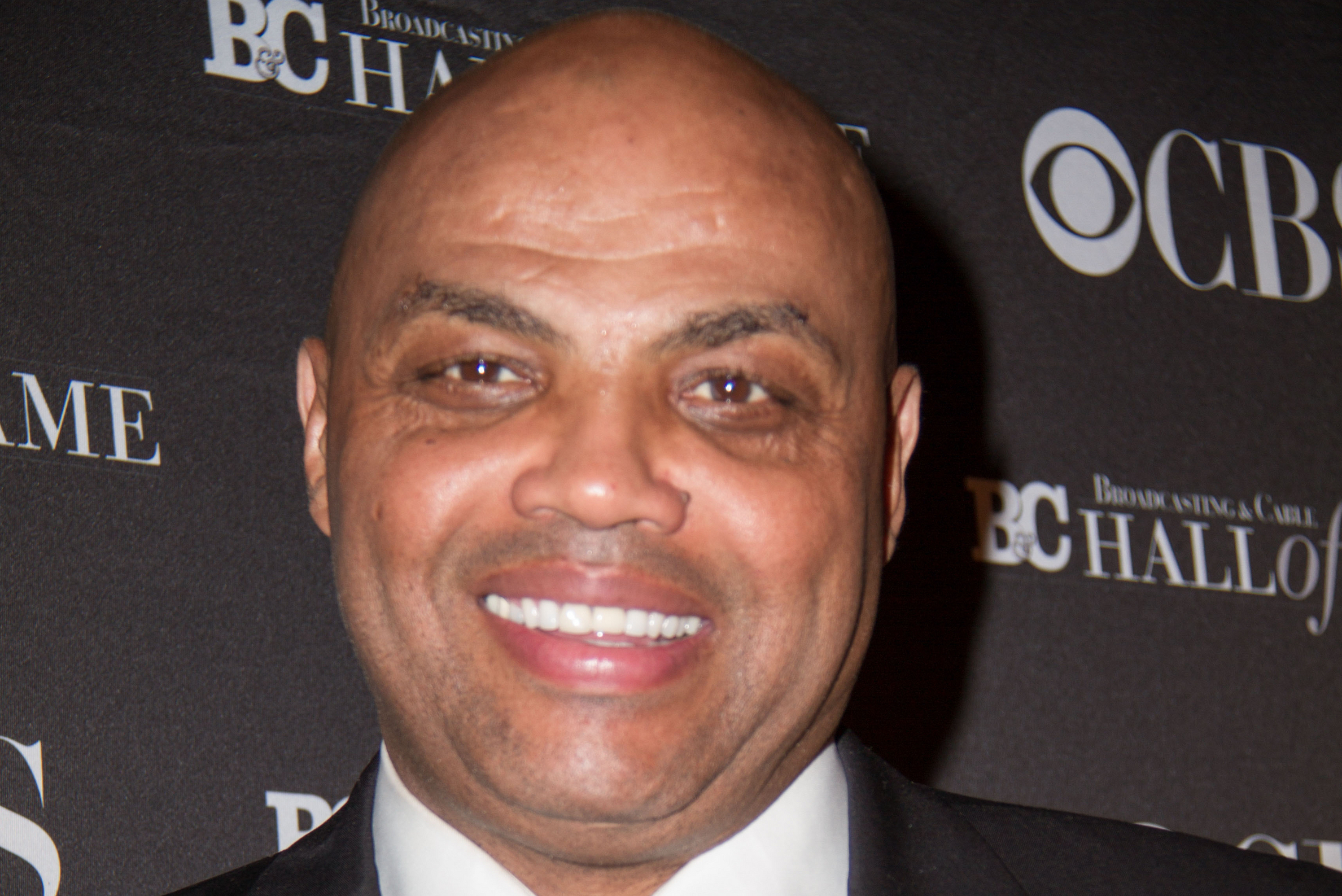
Charles Barkley may be a basketball icon and popular sports commentator, but his views on race have led many in the Black community to cast him a side-eye. But TNT thought his controversial views would make for compelling TV and signed him up for a six-part TV series on race called The Race Card, airing in 2017.
For one of his show segments, Barkley traveled to a West Baltimore church to talk to residents about their relationship to the police in the wake of both the Freddie Gray, Jr. case and the Justice Department’s finding that Baltimore’s Black residents experienced a pattern of racial profiling. When Barkley shared his support of the police, the crowd wasn’t having it.
Barkley and a TNT production crew came to Baltimore on Monday to film segments for The Race Card, a six-part program scheduled to air in 2017, in which Barkley is to engage communities on hot-button topics.
There are few more contentious contemporary issues in America than the relationship between police and the African-American community.
And there are few cities where the sides are more divided than Baltimore, where the April 2015 death of Freddie Gray from spinal injuries sustained while he was in police custody set off riots and looting.
Three of six officers who were charged in Gray’s death were acquitted in respective trials. Following the third acquittal in July, Baltimore City State’s Attorney Marilyn J. Mosby dropped charges against the remaining three officers, citing long odds in securing convictions against them.
Following Gray’s death, the Justice Department launched an investigation into the patterns and practices of the city’s police department. In August, the department issued a scathing 163-page report charging that Baltimore police had violated the constitutional rights of residents by using excessive force and by conducting illegal stops. The report noted that those practices had a particular effect on poor, black residents who were much more likely to be stopped and arrested unnecessarily than other Baltimoreans.
With that as a prologue to Tuesday’s meeting at Southern Baptist Church, the site of a fire during the riots, Barkley spoke of his desire to “start a dialogue” between the police and the community.
Barkley said he arrived in Baltimore on Monday. During his 48 hours in the city, he said, he met with the families of victims of police shootings, as well as doing ride-alongs with police.
Barkley said he knew that “racism exists. Always has. Always will,” but contended that American discrimination was more about economic empowerment than skin color.
“America discriminates against poor people, whether you’re white, black, Hispanic, whatever,” said Barkley. “Poor people are dealt a crappy hand.”
However, it was when Barkley expressed support for police that the mood of the audience, which had been on edge, turned openly hostile.
Barkley criticized the audience, many of whom are community activists, saying he didn’t believe that any of them had expressed sympathy for the families of four police officers who were shot Sunday in separate incidents around the United States.
In one case, a San Antonio detective was killed while writing a ticket following a traffic stop.
“Did anybody say, ‘Man, I feel bad for their family’? ” asked Barkley. “There was no love [for police] in this room.”
When Diane Butler, the mother of Tyrone West, a local man who died after a 2013 struggle with police following a traffic stop, told Barkley, “I don’t know you, I don’t like you,” chiding him for empathizing with police for having to make split-second decisions. Barkley did not back down.
“I’m sorry for your loss,” said Barkley, then adding, “As far as you not liking me, it really doesn’t bother me. I’m used to it. I’m like the homecoming queen. All the ugly girls hate you. That’s part of my life. I never take anything personally.”
From there, things further deteriorated, as audience members took turns insulting Barkley for either a perceived lack of knowledge of Baltimore and its policing issues or his declarations of his philanthropy or both.
“What does your condolence mean to her?” said one audience member, gesturing toward Butler. “How simple and arrogant are you? There are so many black men that care about our community that for us to dwell on one man that just won’t get it is a waste of everybody’s time.”
Jill P. Carter, who represents a portion of the city in the Maryland House of Delegates, called Barkley’s presence “nonproductive,” and called on him to “do a little research on the history, on the community and on what’s been transpiring.”
The meeting closed with a group of activists shouting at Barkley, who was whisked off the stage by staff and security after wishing the audience a happy Thanksgiving.
[ione_media_gallery id=”3479776″ overlay=”true”]
Like BlackAmericaWeb.com on Facebook. Follow us on Twitter.
Charles Barkley Angers West Baltimore Residents In TV Taping was originally published on ioneblackamericaweb.staging.go.ione.nyc


